
A warehouse security risk assessment identifies what you need to protect, who or what threatens it, where the site is vulnerable, how likely and how serious each risk is, and which controls will bring the risk to an acceptable level. Done well, it gives you a prioritised, costed action plan and a record of your reasoning that you can share with insurers, clients and your security provider.
Read moreShow less
This guide sets out a practical method for warehouse, distribution and logistics sites, followed by a checklist you can use on a site walk.
Key takeaways
- A security risk assessment links what you need to protect to the threats it faces and the weaknesses that could be exploited.
- Scoring likelihood and impact separately helps prioritise spending on the risks that matter most.
- Warehouses face internal as well as external threats, so procedures and people matter as much as fences and cameras.
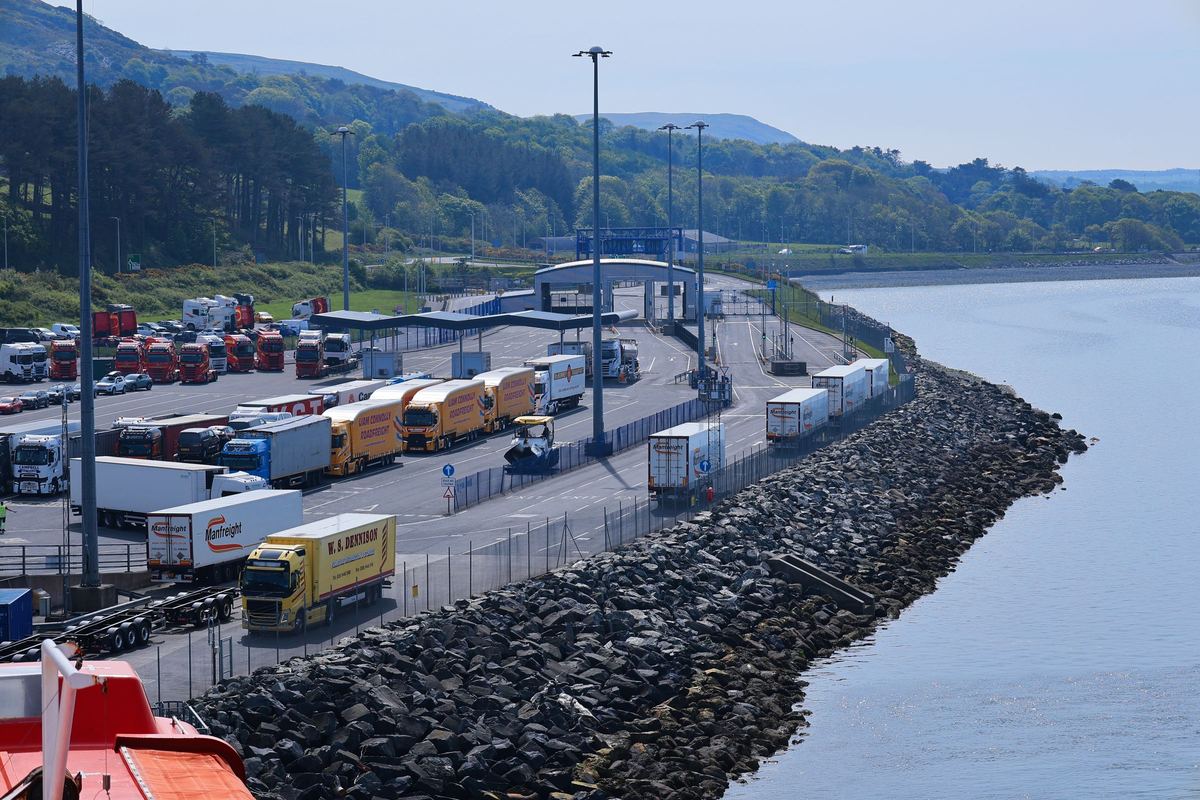
- The yard, loading bays and trailer parking are often the weakest areas.
- Record the assessment, assign owners to each action and review it after incidents or operational changes.
Why carry out a security risk assessment?
Health and safety law already requires employers to assess risks to people, and HSE describes the basic approach as identifying hazards, assessing the risk and taking action to control it.
Read moreShow less
A security risk assessment applies the same discipline to crime and deliberate harm. It also helps you:
- spend on the controls that address the highest risks, rather than the most visible ones;
- specify security services properly when going to tender;
- demonstrate to customers and insurers that risks are being managed;
- protect staff, including those working alone or at night.
A five-step method
Read moreShow less
Step 1: Identify assets
List what you are protecting. In a warehouse this usually includes:
- People: employees, agency staff, drivers and visitors.
- Stock: particularly high-value, easily resold or desirable lines.
- Vehicles and trailers: loaded trailers in the yard, tractor units, forklifts.
- Infrastructure: the building, racking, sprinklers, power, IT and warehouse management systems.
- Information: delivery schedules, customer data and access codes, which can help criminals plan.
- Reputation and contracts: service levels to customers and their confidence in you.
Step 2: Identify threats
Consider who might cause harm and how:
- external theft, including from the yard and parked trailers;
- internal theft and collusion between staff, drivers or contractors;
- fraudulent collections using false paperwork or identities;
- criminal damage, trespass and arson;
- violence or aggression towards staff;
- unauthorised access to systems or data.
Use your own incident records, near misses and insurer feedback. Do not import national crime statistics unless they are sourced and relevant to your location.
Step 3: Identify vulnerabilities
Walk the site at different times, including at night and during shift changes. Look at the perimeter, gates, yard, loading docks, doors and windows, roof access, lighting, CCTV coverage, alarm zones, key control, visitor and driver procedures, and how stock and paperwork move through the site.
Step 4: Score each risk
For each threat-vulnerability pair, score likelihood and impact on a simple scale and multiply them. A five-point scale is common:
| Score | Likelihood | Impact |
|---|---|---|
| 1 | Rare: not expected to occur | Negligible: minor loss, no injury, no service impact |
| 2 | Unlikely: could occur occasionally | Minor: small loss, brief disruption |
| 3 | Possible: might occur at some point | Moderate: notable loss or disruption, minor injury |
| 4 | Likely: will probably occur | Major: significant loss, missed customer deliveries, serious injury |
| 5 | Almost certain: expected to occur | Severe: major loss, loss of contract, life-threatening harm |
Risk rating = likelihood × impact. A common approach is to treat 1 to 6 as low, 8 to 12 as medium and 15 to 25 as high, but agree your own thresholds and apply them consistently. Base likelihood on evidence where you can: incident history, the attractiveness of the stock and the strength of existing controls.
Step 5: Decide controls and record residual risk
For each medium or high risk, choose controls, assign an owner and a deadline, and re-score the risk with the controls in place. Controls generally fall into four groups:
- Physical: fencing, gates, dock doors, high-security cages for high-value stock, vehicle barriers.
- Electronic: intruder alarms, CCTV, access control, lighting.
- Procedural: driver and visitor checks, seal checks, key control, separation of duties, stock counts.
- People: gatehouse officers, patrols, keyholding and alarm response, staff training.
Worked example
Read moreShow less
| Risk | L | I | Rating | Controls | Residual |
|---|---|---|---|---|---|
| Theft from loaded trailers parked in the yard overnight | 4 | 4 | 16 (high) | Gated yard, trailer parking away from perimeter, kingpin locks, CCTV coverage of trailer park, overnight patrols | 2 × 4 = 8 (medium) |
| Fraudulent collection using false paperwork | 3 | 4 | 12 (medium) | Pre-advised collections only, driver ID checks at gatehouse, call-back verification with haulier | 2 × 4 = 8 (medium) |
| Out-of-hours alarm activation with no one attending | 3 | 3 | 9 (medium) | Professional keyholding and alarm response, agreed attendance procedure | 2 × 3 = 6 (low) |
The figures above are illustrative. Your scores should reflect your own site and evidence.
Warehouse security checklist
Read moreShow less
| Area | Check | Yes / No / Action |
|---|---|---|
| Perimeter | Fence continuous, in good repair, no climbing aids alongside | |
| Gates | Controlled, closed outside operating hours, gatehouse procedures written | |
| Yard | Trailers parked away from fence; loaded trailers secured; yard lit | |
| Loading docks | Doors closed when not in use; dock area visible to supervisors or CCTV | |
| Building shell | Doors, windows, roof lights and roof access secured | |
| High-value stock | Held in a controlled area with restricted access | |
| Alarm | Maintained, zoned sensibly, monitored, with keyholders who can attend | |
| CCTV | Covers entrances, yard and docks; recording checked; signage and data protection compliance in place | |
| Access control | Staff and visitor access restricted by area; leavers removed promptly | |
| Keys and codes | Register of key holders; codes changed when staff leave | |
| Drivers and visitors | Identity checked, logged, escorted or restricted to driver areas | |
| Staff | Pre-employment checks proportionate to role; reporting route for concerns | |
| Lone working | Risk assessed; check-call or monitoring arrangements in place | |
| Incident records | Incidents logged, reviewed and used to update the assessment |
Who should be involved?
A security risk assessment is stronger when it draws on several perspectives.
Read moreShow less
Involve the site or general manager, the transport or yard manager, the health and safety lead, someone who understands the alarm, CCTV and access control systems, and your security provider if you have one. Where you store goods for third parties, customers may have their own security requirements written into contracts, so include those too. Your insurer or broker may also be able to share expectations for your type of premises.
Turning the assessment into a security specification
The output of the assessment should translate directly into what you ask a security provider to do.
Read moreShow less
For each risk that relies on people-based controls, specify:
- the post or patrol required, and its hours;
- the duties, such as driver checks at the gatehouse, seal checks, yard patrols or lock-up checks;
- what must be recorded and reported, and how often;
- how incidents are escalated and to whom.
This makes quotations comparable and gives you a clear basis for measuring performance. See what to include in a security tender.
People and data considerations
Warehouses depend on large, sometimes changing workforces, so internal threats need attention.
Read moreShow less
Proportionate pre-employment checks, separation of duties between receiving, picking and despatch, and a confidential way to report concerns all reduce opportunity.
CCTV that captures employees is processing personal data. The ICO expects organisations to carry out a data protection impact assessment for surveillance likely to result in high risk to individuals, which includes monitoring workers, and to set out signage, retention and access arrangements.
Keeping the assessment live
Review the assessment at least annually and whenever something changes: a new customer with higher-value stock, a change of shift pattern, building works, a serious incident or a pattern of minor ones.
Read moreShow less
Record what you reviewed and what changed.
How Seccuro can help
Seccuro’s security guarding can be configured for warehouse and distribution sites, including gatehouse and access control duties, internal and yard patrols and reporting, supported by mobile patrols, keyholding and CCTV monitoring.
Read moreShow less
See our logistics and warehousing page, or request a quote to arrange a site survey.
Questions
What should a warehouse security risk assessment include?
It should list the assets you are protecting, the threats they face, the vulnerabilities that could be exploited, a likelihood and impact score for each risk, the controls you will apply, who owns each action, and the residual risk once controls are in place.
What are the most common warehouse security weak points?
Yards and trailer parking, loading docks left open, weak driver and collection checks, poor key and code control, gaps in CCTV coverage and alarms without anyone able to attend. Internal theft and collusion also need procedural controls.
Do I need a DPIA for warehouse CCTV?
Most warehouse CCTV captures staff, so carrying out and recording a DPIA, in line with the ICO expectation described above, is sensible.
Sources (5)Hide sources
- HSE: Managing risks and risk assessment at work
- HSE: Logistics
- HSE, Lone working: protect those working alone
- ICO, Video surveillance guidance: accountability
- ICO, CCTV for your organisation: things you need to do
General guidance, not legal advice. Check current legislation and official guidance for your circumstances.