
Security Guarding Services
SIA-licensed security officers deployed to your premises to control access, patrol, respond to incidents and report.
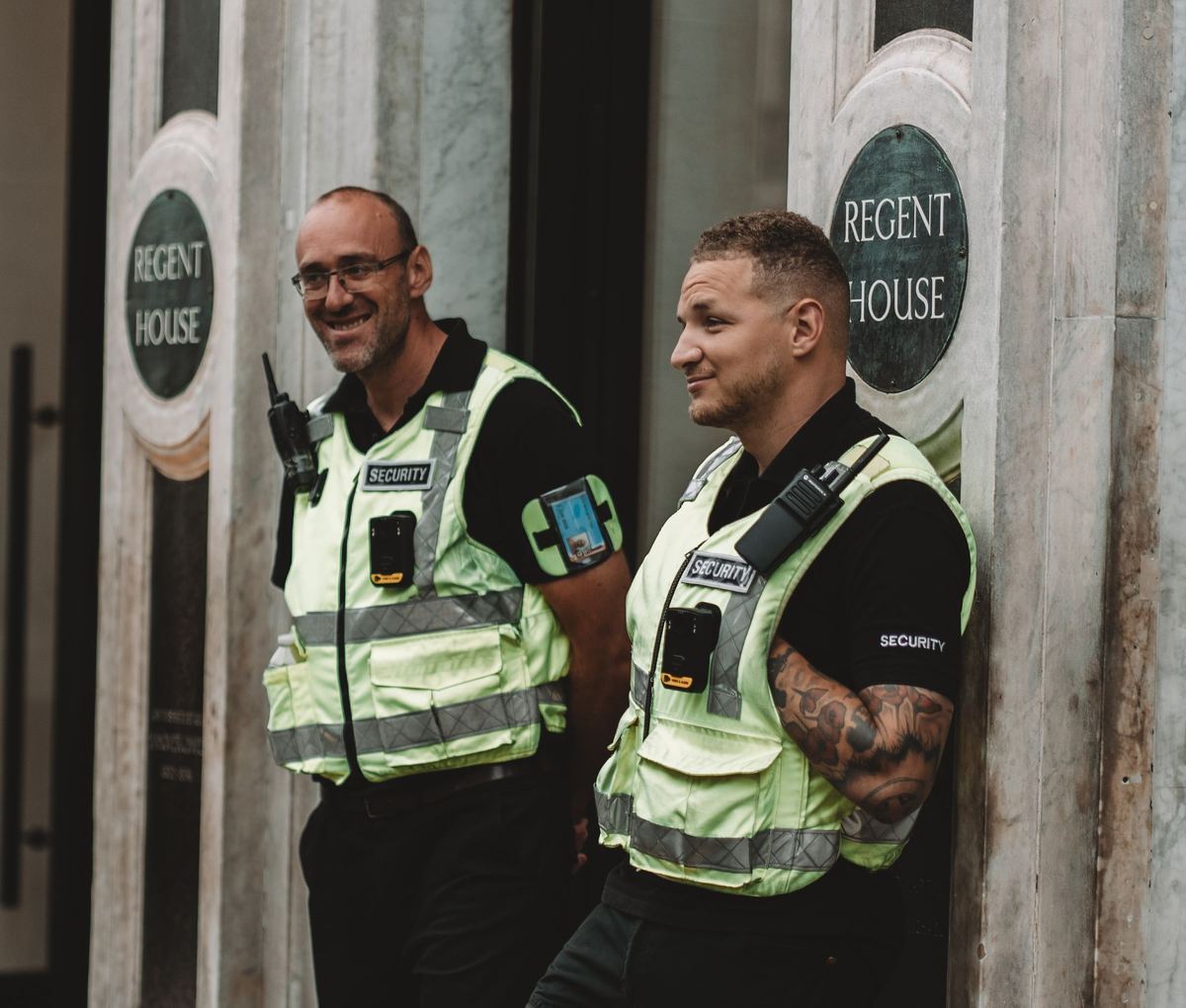
Security guarding is the deployment of SIA-licensed officers to protect premises, people and property against theft, damage, unauthorised access and disorder. It is also called manned guarding or static guarding. Officers work set shifts on site, controlling access, patrolling, responding to alarms and incidents, and recording what happens in shift reports.
- A visible deterrent
- Controlled access
- Human judgement on site
- Documented assurance
- Regulated provider
- Flexible cover
How it works
- 1Site survey
- 2Proposal and assignment instructions
- 3Mobilisation
- 4Supervision
- 5Reporting
- 6Review
The detail
Open any topic for the full explanation.
Manned guarding, static guarding and security guarding: what the terms mean
Buyers meet three overlapping terms. Security guarding is the name the Security Industry Authority (SIA) uses for the licensable activity of guarding premises or property against damage, theft, unauthorised access or disorderly behaviour. Manned guarding is the older umbrella term in the Private Security Industry Act 2001, and is still common in tenders. Static guarding describes one way of delivering it: officers stationed at a fixed site for a defined shift, rather than visiting by vehicle.
In practice, a static guarding contract rarely means an officer standing still. Most assignments combine a fixed post (a gatehouse, reception or loading bay) with timed foot patrols of the perimeter and internal patrols of the building. Where you only need checks at intervals rather than a continuous presence, mobile security patrols are usually the more economical choice.
Which SIA licences our officers hold
Every officer is SIA-licensed and wears Seccuro uniform. The licence is matched to the role:
- Door Supervisor: the most versatile SIA licence. It covers security guard roles as well as public-facing venues.
- Security Guard: corporate, retail, warehousing, logistics and construction sites.
- Public Space Surveillance (CCTV): control room and remote CCTV monitoring operators.
Officers are trained at GuardCampus, our own Highfield-approved training centre, vetted to BS 7858 and re-checked every day for right to work and licence status.
What our officers do on shift
Duties are set out in assignment instructions written for your site. Typical tasks include:
- Access control: checking passes, signing visitors and contractors in and out, issuing temporary badges, and refusing entry where the agreed criteria are not met.
- Foot patrols: external checks of fences, gates, yards, car parks and vulnerable elevations at varied times, so the pattern is not predictable.
- Internal patrols: checking doors, windows, plant rooms, fire exits and restricted areas, and reporting hazards such as blocked escape routes or water leaks.
- Reception and front-of-house: a professional first point of contact that also controls who enters the building. See reception security.
- Monitoring electronic systems: watching on-site CCTV, responding to intruder or access control alarms, and working alongside remote monitoring where it is in place.
- Incident response and reporting: dealing with incidents within the limits of their role, contacting emergency services where needed, and recording events accurately.
Integrating guarding with electronic systems
Guarding is most effective when officers and technology support each other. CCTV extends what one officer can see. Access control systems create an audit trail that officers can check against what they observe. Intruder alarms tell officers where to look first. We can work with your existing systems, or advise on adding remote CCTV monitoring or a monitored CCTV tower or pod where the survey shows a gap.
A well-designed mix can sometimes reduce the number of guarding hours needed, for example by covering quieter overnight periods with monitored cameras and patrol visits rather than a second officer. We will say so where it applies.
How a guarding requirement is scoped and priced
No two sites need the same cover, so we price from a site survey rather than a rate card. The main factors are:
- Hours and pattern: 24/7 cover, nights and weekends only, or business hours, and whether any posts need more than one officer.
- Duties and skills: front-of-house work, first aid cover, CCTV operation or specialist site inductions all affect officer selection.
- Pay rates: the statutory National Living Wage, premiums for nights, weekends and bank holidays, and any client requirement to pay above minimum rates.
- Site risk: isolated locations, high-value stock or a history of incidents may call for lone-worker monitoring, extra patrols or supporting technology.
- Contract term: longer, stable contracts allow more consistent officer assignment and supervision planning.
For background on what drives cost, read our guide to security guard costs in the UK.
Licensing, law and standards
Under the Private Security Industry Act 2001, anyone carrying out security guarding under contract must hold an SIA front-line licence, normally valid for three years and worn while on duty.
BS 7499 is the British Standard code of practice for static guarding services, and BS 7858 covers security screening of people employed in a secure environment. We refer to these standards in how we work, but we do not claim certification to them. When comparing providers, check the SIA register, ask to see licence details for assigned officers, and ask how screening, training and supervision are carried out. Owners of some publicly accessible premises should also follow progress on the Terrorism (Protection of Premises) Act 2025 (Martyn’s Law), which has an implementation period before duties apply.
Technology and reporting
Officers record shift activity and incidents in written reports, shared with you in the format agreed at mobilisation. Guarding can be combined with remote CCTV monitoring, CCTV towers and pods, and 24-hour control room support. More detail is on our technology and reporting page.
Questions
What do you need from us before officers start?
We need a named site contact and escalation list, access arrangements, any site rules and induction requirements, emergency procedures, and details of alarm, CCTV and access control systems officers will use. Somewhere for officers to take breaks and welfare facilities are also needed. We use this to write the assignment instructions you approve before mobilisation.
How quickly can you put officers on site?
It depends on the location, hours and duties. We provide rapid deployment for short-notice cover, and agree a realistic mobilisation date for planned contracts once we have surveyed the site. We do not promise timescales we cannot meet, so we confirm them in writing for your site. For urgent needs, see our emergency security cover service.
What reporting will we receive?
Officers keep shift logs and complete incident reports. You agree the format and frequency at mobilisation, for example a daily summary to your facilities team and immediate notification of significant incidents to a named contact. Reports give you a record for insurers, landlords and internal audit.
Can we change the hours or number of officers during the contract?
Yes. Cover can be increased for peak trading, events, refurbishment work or a short-term rise in risk, and reduced afterwards. Changes are agreed with your account contact and reflected in the assignment instructions. Notice periods for permanent changes are set out in the contract.
Talk to us about your site
We review every enquiry and come back with a written, costed proposal.
Prefer to talk? 0330 520 2207
Fields marked required are all we need to prepare a proposal.