
Construction Site Security
A layered security plan for construction sites: guarding and gate control during the working day, patrols and remote technology out of hours, and incident reporting your project team can act on.
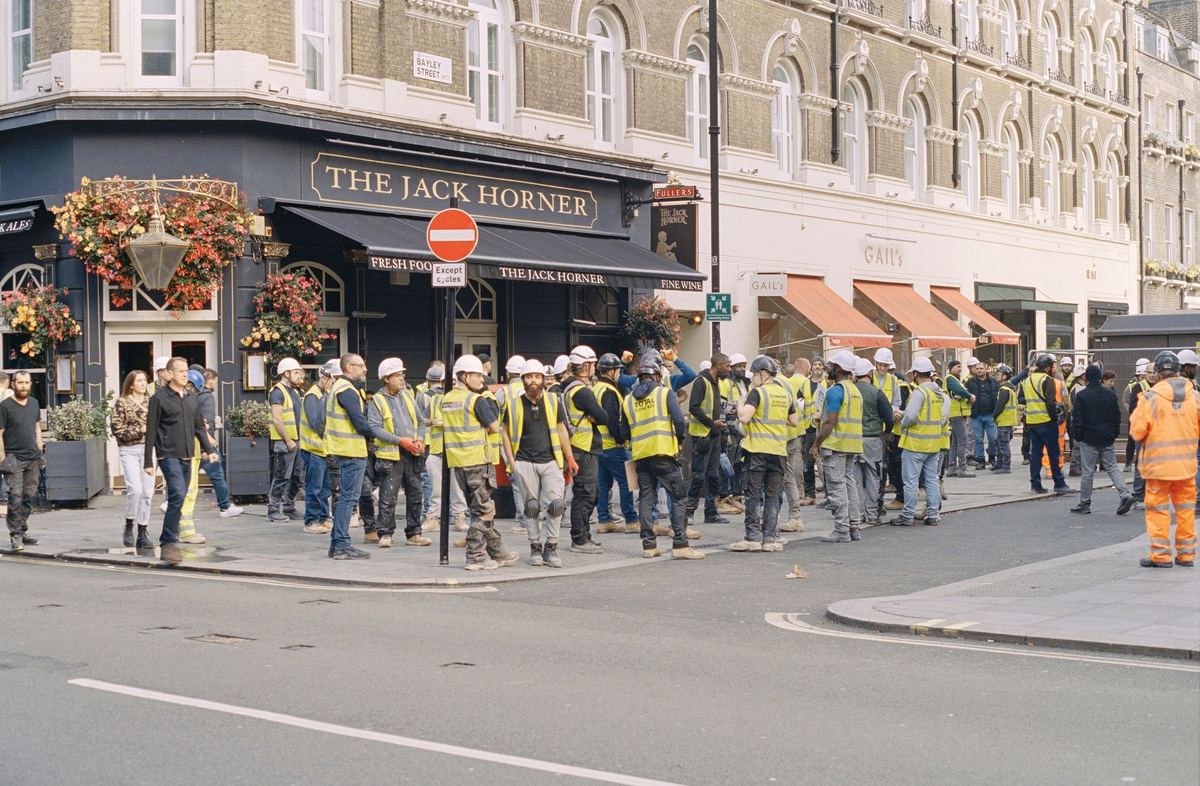
Construction site security protects a building site, its plant, materials and welfare facilities from theft, vandalism and trespass. It usually combines site access control during working hours with out-of-hours protection: guards, mobile patrols, off-grid CCTV towers, scaffold alarms and lighting, adjusted as the project moves through each phase.
- Reduced plant and materials theft
- Cover from day one
- Controlled site access
- Scaled to the programme
- Fewer programme delays
- Evidence records
How it works
- 1Site survey
- 2Security plan and assignment instructions
- 3Mobilisation
- 4Supervision and response
- 5Reporting
- 6Phase reviews
The detail
Open any topic for the full explanation.
Why construction sites need a different approach
A construction site changes week by week. The perimeter moves, scaffolding goes up, plant arrives and leaves, and high-value materials such as cable, copper pipe and tools are delivered and stored. Sites are often empty from late afternoon until early morning and through the weekend, and many have no mains power for the first months of the programme.
That means security has to be planned around the build programme, not fixed on day one. We look at what is on site at each stage, when the site is unoccupied, and where the realistic routes in are, then recommend the mix of officers and technology that fits. Our guide to preventing construction site theft covers the common risks in more depth.
The services we combine
- Site security officers: gate and access control during working hours, out-of-hours security guarding, and patrols of compounds, cabins and plant.
- Mobile patrols: marked vehicles visiting at scheduled or random times to check the perimeter, hoarding, gates and compound, with a digital report for each visit.
- CCTV towers: off-grid towers that need no refuelling, useful from site set-up before power is connected.
- Scaffold alarms: Go ScaffSecure wireless intruder detection with twin PIR sensors, a 15 m detection range, an infrared camera that captures each alert and a lithium battery lasting 3 years or more.
- Solar lighting towers: Go Solar Lighting Towers with 50,000+ lumens of LED floodlighting on a mast up to 8 m, switching on automatically from dusk to dawn with no fuel or generator.
- Security pods: Go Sentinel Pods for cabins, stores and other indoor areas, with 360° detection, 4K and thermal cameras, a siren and live audio talkdown, on mains or battery power.
Site access control and out-of-hours protection
During the working day, officers at the gate check operatives and visitors against the induction list, log deliveries and vehicles, and stop people entering without the required induction or PPE. This supports the principal contractor’s site rules and gives an accurate record of who was on site.
Out of hours, the priority shifts to plant, fuel, tools and materials. Common measures include locking and checking compounds and containers, confirming plant is immobilised and keys are secured, checking hoarding and Heras fencing for gaps, and responding to activations from towers or scaffold alarms. Where a site cannot justify an overnight officer, remote technology with patrol response can provide cover at lower cost.
Incident reporting your project team can use
Every incident is recorded with the time, location, what was found, who was contacted and what action was taken, supported by images where cameras are in place. That gives the site manager evidence for police reports and insurers, and helps you spot patterns, such as repeated attempts at the same fence line. You agree the escalation contacts at mobilisation, so the right person hears about a break-in before the morning start. See security incident reporting explained.
Licensing, law and standards
The Construction (Design and Management) Regulations 2015 place duties on the client, principal designer and principal contractor. Regulation 13 requires the principal contractor to ensure the necessary steps are taken to prevent unauthorised access to the site, and regulation 18 requires the perimeter to be marked or fenced where necessary, in line with the level of risk. Clients must make suitable arrangements for managing the project. Commissioning security can support these arrangements, but it does not transfer any duty holder’s legal responsibilities to Seccuro. We work within your site rules and construction phase plan.
Site officers carrying out guarding hold SIA front-line licences. Cameras that capture public spaces or neighbouring property must be operated in line with UK GDPR, the Data Protection Act 2018 and ICO guidance on video surveillance, including clear signage.
Technology and reporting
Mobile patrols use marked vehicles with satellite tracking and wearable digital patrol recording, with a digital report produced for each visit. Off-grid CCTV towers, scaffold alarm cameras, security pods and solar lighting towers are specified to suit the site. Remote CCTV monitoring and 24-hour control room support link technology to a human response. More on our technology and reporting page.
Questions
Do we need a guard on site overnight, or will towers and patrols do?
It depends on what is on site and how exposed it is. Sites holding high-value plant, fuel or materials, or with a history of break-ins, often justify an overnight officer. Lower-risk sites can often be covered by monitored CCTV towers, scaffold alarms and mobile patrol visits at lower cost. We recommend a mix after the survey and review it as the programme changes.
What affects the cost of construction site security?
The main factors are the number of officer hours, whether cover is 24/7 or out of hours only, how many patrol visits are needed, the number and type of towers, alarms and lighting units, the length of the hire or contract, and site access and location. We price from a survey and show how the cost changes if the mix changes, so you can make an informed choice.
Can the equipment work without mains power?
Yes. Our Go Solar 365 AI CCTV Towers and Go Solar Lighting Towers run on solar power and a battery bank, with no fuel or generator. Go ScaffSecure scaffold alarms use a lithium battery lasting 3 years or more, and Go Sentinel Pods can run on mains or battery power.
What do you need from the site team?
We need the site manager’s contact and escalation list, the site induction, the logistics plan showing gates, compounds and storage, working hours, and any rules on plant, keys and deliveries. For towers and alarms we need agreed positions and access for installation. Officers also need welfare facilities on site.
What happens when an alarm is triggered at night?
Activations are handled under the procedure in your assignment instructions. Typically this means verifying the activation, attending or dispatching a patrol, checking the area, contacting the police where a crime is in progress, and notifying your nominated contact. An incident report follows every activation. See our alarm response service for detail.
Talk to us about your site
We review every enquiry and come back with a written, costed proposal.
Prefer to talk? 0330 520 2207
Fields marked required are all we need to prepare a proposal.