
Security guarding at a distribution centre means placing SIA-licensed officers in defined posts, usually the gatehouse, internal and external patrols, reception and staff search points, across a shift pattern that covers every operating hour. A well-designed guarding service controls vehicle and people movement, protects stock, supports health and safety in the yard and produces accurate records for the operation. Staffing levels depend on the number of entrances, the size of the site, the value of stock and the hours of operation.
Read moreShow less
This guide focuses on the guarding service itself: which posts a distribution centre typically needs, how shifts and staffing work, and how to manage performance. For the broader set of physical and procedural controls, see logistics facility security requirements.
Key takeaways
- Distribution centre guarding is built around posts, typically gatehouse, patrol, reception and search, each with defined duties.
- Continuous 24/7 cover needs a shift pattern and enough trained relief officers to fill every hour without excessive working time.
- Peak trading periods, stock takes and system changes need planned additional cover agreed well in advance.
- Supervision, induction and assignment instructions determine service quality more than headcount alone.
- Measure shift fill, gate log accuracy, patrol completion and incident reporting rather than hours alone.
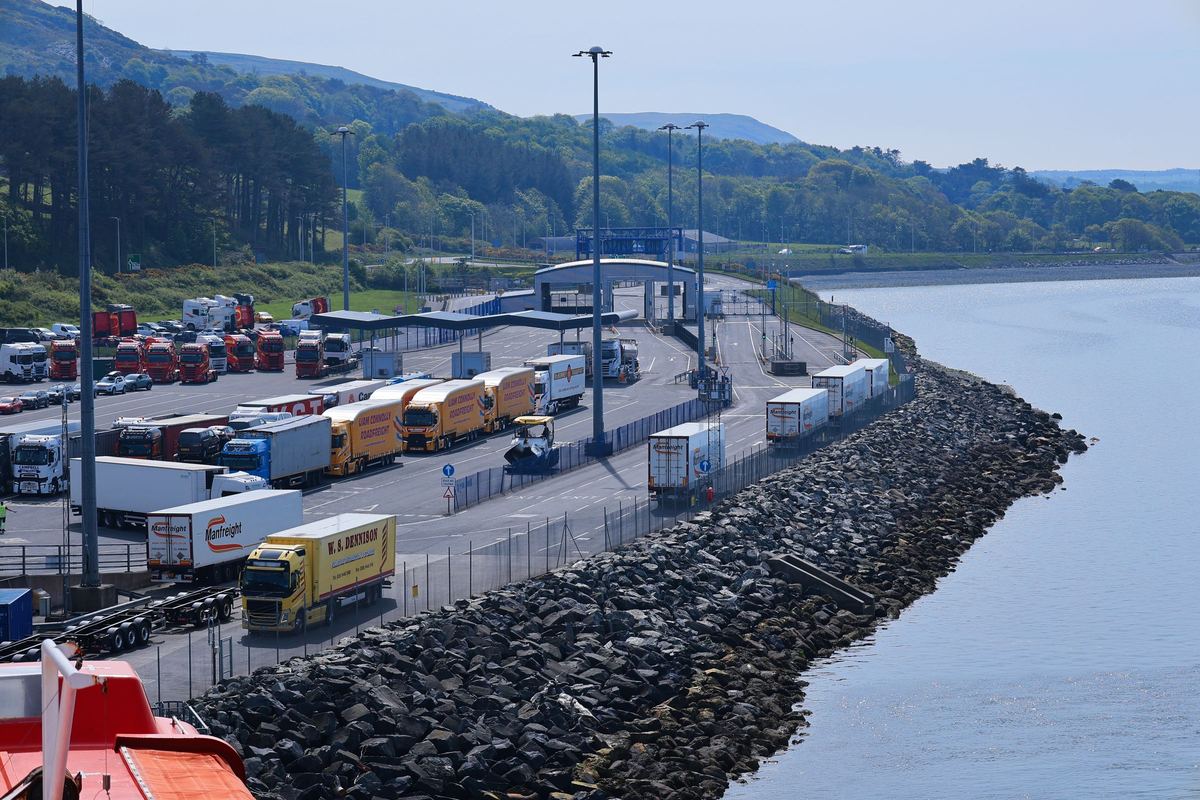
Typical guarding posts at a distribution centre
Read moreShow less
| Post | Core duties | When it is usually needed |
|---|---|---|
| Gatehouse officer | Vehicle booking checks, gate log, seal checks, driver briefings, visitor passes, barrier control | Whenever vehicles arrive or depart, often 24/7 |
| External patrol officer | Perimeter and yard patrols, trailer checks, fence inspections, car park patrols | Overnight and at weekends; larger sites at all times |
| Internal patrol officer | High-value cage checks, fire door checks, alarm checks, hazard reporting | Overnight, during low-staffing periods |
| Reception or staff entrance officer | Staff and agency worker sign-in, visitor management, key control | Shift changeovers and office hours |
| Search officer | Searches of people, bags or vehicles under the client’s policy | At shift ends or randomly, where policy allows |
| CCTV operator | Monitoring cameras on site, directing patrols, recording evidence | Larger sites with an on-site control room |
Not every site needs every post. A smaller warehouse may combine gatehouse and patrol duties in one officer overnight, supported by remote CCTV monitoring and mobile patrols. A large multi-user distribution centre may need several officers at once.
The gatehouse: the busiest post
At most distribution centres, the gatehouse officer carries the greatest workload and the greatest responsibility.
Read moreShow less
In a single shift the officer may process large numbers of vehicles, each requiring a check against the booking system, a record of registration and trailer numbers, and a briefing for the driver on site rules. Errors at the gate, such as an unexpected trailer allowed in or a seal number not recorded, can undermine every other control.
To support the gatehouse:
- give officers access to the booking or yard management system rather than paper lists;
- agree clear rules for unbooked arrivals, early or late vehicles and mismatched paperwork;
- provide a safe position away from moving vehicles, consistent with HSE workplace transport guidance on separating people and vehicles;
- schedule breaks so the gate is never left unattended during operating hours;
- use a second officer at peak arrival times rather than relying on one person.
Searching staff and vehicles
Searches can deter internal theft, but they must be handled carefully.
Read moreShow less
Security officers have no general legal power to search people. Searches should be based on the client’s written policy, with a basis in employment contracts for employees and in agency or contractor agreements for others, and carried out with consent. Assignment instructions should specify:
- who may be searched and how they are selected (for example, a random selection method);
- what a search involves and where it takes place;
- arrangements for privacy and dignity, including same-sex searching where appropriate;
- what happens if someone declines a search;
- how findings are recorded and reported to the client.
Search outcomes and refusals should be recorded consistently, because inconsistent practice is difficult to defend.
Shift patterns and staffing levels
A single post covered 24 hours a day, 7 days a week amounts to 168 hours a week.
Read moreShow less
No individual can cover that, so a post needs a team of officers working a rotating pattern, plus trained relief officers for holidays, sickness and training. The provider should be able to show:
- the shift pattern proposed, such as 12-hour days and nights or 8-hour shifts;
- how many officers are assigned to each post, including relief;
- how it manages working time, rest breaks and fatigue;
- how relief officers are inducted before they work on site alone.
Long shifts can suit some officers and reduce handovers, but fatigue is a real risk, particularly on night shifts in large, quiet buildings. Lone working must be risk-assessed and managed before it starts, as HSE guidance makes clear. Lone worker monitoring, regular check calls and an escalation route to a control room are common measures.
Planning for peaks and change
Distribution centres rarely operate at a steady level.
Read moreShow less
Plan additional cover for:
- seasonal peaks, such as the run-up to Christmas, when vehicle movements and agency staff numbers increase;
- stock takes, when high-value areas may be open for longer;
- site changes, such as racking installations or system migrations that disrupt normal routines;
- new client contracts at multi-user sites;
- incidents, such as a break-in requiring temporary guarding while repairs are made.
Agree in advance how much notice the provider needs, how additional officers will be inducted and what rates apply. Seccuro offers rapid deployment for short-notice cover where a site needs it.
Supervision and assignment instructions
Service quality depends heavily on supervision.
Read moreShow less
A provider should explain how often supervisors or managers will visit, including at night and weekends, what they check (post standards, patrol records, licence display, knowledge of procedures) and how findings are fed back to the client. Assignment instructions should be specific to the site, signed off by the client and reviewed whenever procedures change.
All contract officers on licensable duties must hold a valid SIA front-line licence and display it while on duty. Clients can check licences on the SIA public register and should ask the provider how it monitors licence expiry dates.
Integrating guarding with technology
Officers at a distribution centre work best when supported by the right systems:
Read moreShow less
- Access control for staff entrances and restricted areas;
- CCTV covering gates, docks, yards and cages, monitored on site or remotely;
- Digital patrol recording so that checkpoints, times and observations are recorded automatically;
- Radios linking gatehouse, patrol officers and the site’s shift managers;
- ANPR at the gate, where justified and operated in line with ICO guidance.
Technology can reduce the number of officers needed overnight, for example by combining one on-site officer with remote CCTV monitoring and mobile patrol visits. Our article on mobile patrols vs static guarding discusses that trade-off.
Measuring performance
Read moreShow less
| Measure | What it shows |
|---|---|
| Shift fill rate | Whether all scheduled hours are covered by inducted officers |
| Gate log accuracy | Spot checks of logged vehicles against bookings and CCTV |
| Patrol completion | Checkpoints recorded against the patrol plan |
| Incident reporting | Reports issued within agreed timescales and with complete information |
| Supervision visits | Supervisor and manager visits delivered against plan |
| Officer stability | How many regular officers remain on the contract over time |
Review these monthly in the first months of a contract, then at an agreed frequency. Use the reviews to adjust posts and hours as operations change.
What drives the cost
The main cost drivers are the number of posts, the hours covered, the shift pattern, pay rates (including night, weekend and bank holiday premiums), supervision, training and any site-specific requirements such as search training or additional screening.
Read moreShow less
When officers transfer from a previous provider, TUPE may apply and their existing terms will influence cost. See our guide to security guard costs in the UK for more detail.
Guarding for your distribution centre
Seccuro’s security guarding service can be configured for distribution centres and warehouses, with gatehouse, patrol, reception and access control posts, supported by mobile patrols, keyholding, remote CCTV monitoring and 24-hour control room support.
Read moreShow less
Services are available across the UK, with mobilisation agreed per site. See our logistics and warehousing security page and security guarding service, or request a quote.
Questions
How many security officers does a distribution centre need?
There is no standard number. A site survey and risk assessment should determine the posts before staffing numbers are agreed.
Is 12-hour shift working acceptable for security officers?
They are common in security. Ask how many consecutive shifts officers work and how breaks are covered.
How do you cover peak periods at a distribution centre?
Agree the extra posts and hours with the provider well ahead, and use officers who already know the site where possible, which reduces risk during busy periods.
Sources (5)Hide sources
- HSE: Workplace transport
- HSE, Lone working: protect those working alone
- GOV.UK: Check security staff have a licence to work
- ICO: Video surveillance (including guidance for organisations using CCTV)
- GOV.UK: Business transfers, takeovers and TUPE
General guidance, not legal advice. Check current legislation and official guidance for your circumstances.