
Security Dog Handling (K9) Services
A licensed handler and trained security dog patrol your site as a team, covering ground faster than an officer alone and providing a strong visible deterrent.
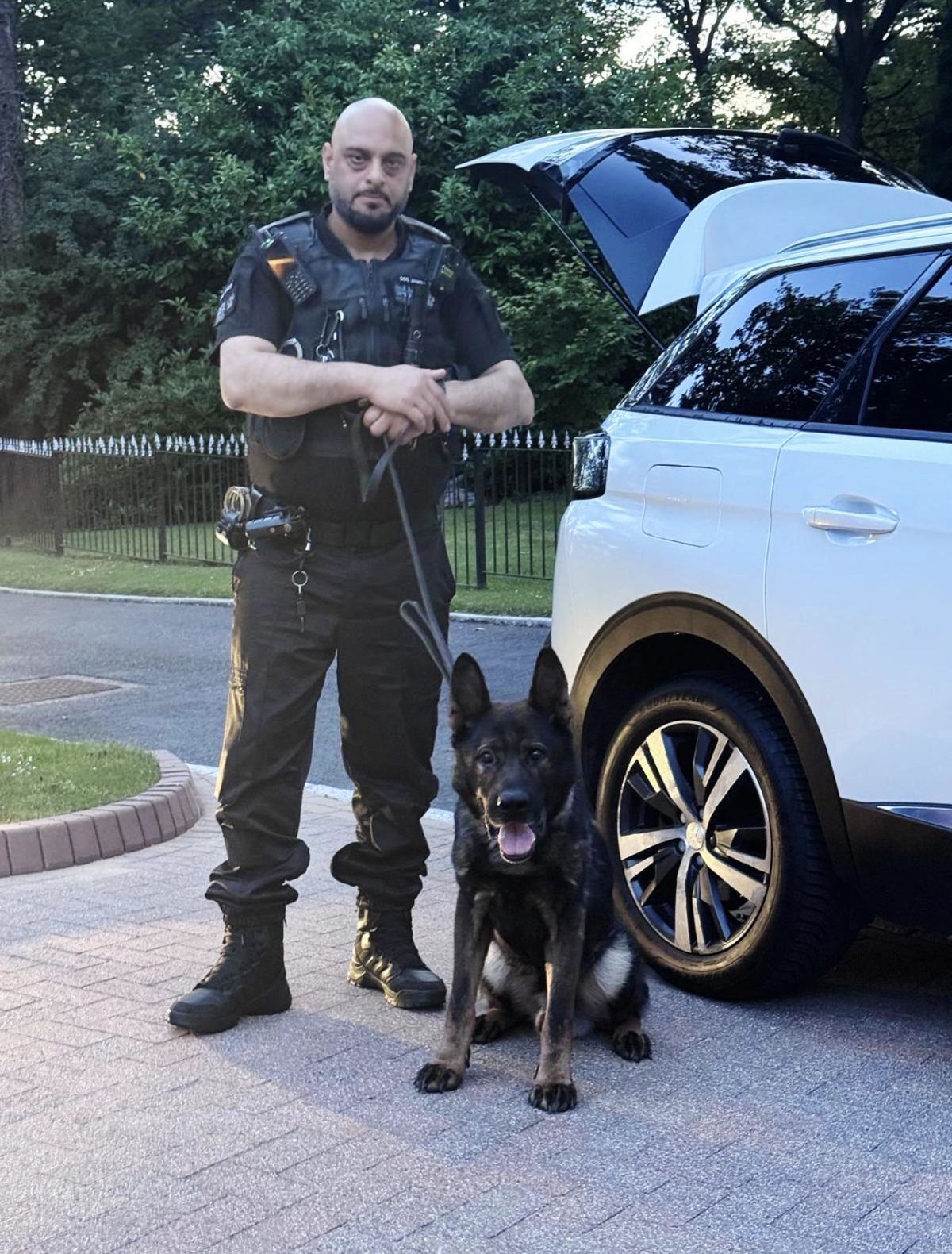
Security dog handling, often called K9 security, is the use of a trained security dog working with a licensed handler to patrol and protect premises. The dog’s senses help detect people the handler cannot see or hear, and its presence deters intruders. In the UK the Guard Dogs Act 1975 requires the handler to keep the dog under control.
- Strong visible deterrent
- Early detection
- More ground covered
- Safer handlers
- Lawful and controlled
- Rapid deployment
How it works
- 1Site assessment
- 2Assignment instructions
- 3Deployment
- 4Supervision
- 5Reporting
- 6Monitoring and review
The detail
Open any topic for the full explanation.
When a security dog team is the right choice
A dog team is not the answer for every site, but for some it is the most effective option. Dogs are particularly useful where:
- The site is large, open or poorly lit, such as a construction site, storage yard or vacant estate, and an officer alone cannot cover the ground.
- There is a history of trespass, theft or anti-social behaviour, and a stronger deterrent is needed.
- Intruders could hide among containers, plant, stacked materials or derelict buildings, where a dog’s sense of smell and hearing give early warning.
- The handler would otherwise be working alone at night in a high-risk area, and the dog adds to their safety.
Dogs are usually less suitable for busy public areas, sites with many people moving around, or premises where the deterrent effect is not needed. In those cases security guarding or mobile patrols may suit better. We will tell you if we think a dog team is not the right fit.
Assessment, deployment and monitoring
Our K9 service follows three stages:
- Assessment: we assess the site, the threat, the layout and any hazards to the dog, such as chemicals, open water, traffic or broken ground, and confirm that a dog team is proportionate.
- Deployment: handler and dog are assigned, warning notices are put up at every entrance, and patrol routes and rest arrangements are agreed in the assignment instructions.
- Monitoring: the deployment is reviewed as the site changes, with incidents reported and patrol patterns adjusted.
Our handlers are NASDU-trained and our dogs are trained in line with BS 8517-1. Every team is a fully equipped mobile unit, with vehicle, dog, kennel and kit, so it can patrol general-purpose high-risk sites and provide night cover.
We also provide rapid K9 response across the UK, deploying a handler and dog to a site at short notice following a break-in or a rise in risk. Handlers are employed directly by Seccuro on PAYE, like all our staff.
The legal requirements for guard dogs
The Guard Dogs Act 1975 sets the core rules for using a guard dog at commercial premises. A dog may only be used if a handler capable of controlling it is present on the premises and the dog is under the handler’s control at all times, except while it is secured so it cannot roam freely. A notice warning that a guard dog is present must be clearly displayed at each entrance to the premises.
Other law applies too. The Dangerous Dogs Act 1991 makes it an offence for a dog to be dangerously out of control, and the Animal Welfare Act 2006 places a duty on the person responsible for an animal to meet its welfare needs. Handlers carrying out guarding hold SIA front-line licences.
Dog welfare on deployment
A dog that is well cared for works better and is safer to deploy. Welfare arrangements are agreed in the assignment instructions for each deployment: rest breaks, water, shelter and safe transport for the dog, protection from extreme heat and cold, and a site free of avoidable hazards. Patrol hours are set with the dog’s needs in mind, not just the site’s. If you are considering K9 cover, our article on security dog handling explained covers welfare, standards and what to ask a provider.
Licensing, law and standards
The BS 8517 series of British Standards relates to security dogs, with BS 8517-1 giving a code of practice for general purpose security dogs, covering handler conduct, dog welfare, kennelling, training and records. NASDU (the National Association of Security Dog Users) is an industry body for security dog users. Seccuro does not claim certification to BS 8517 or membership of NASDU. When comparing providers, ask how handlers and dogs are trained and assessed, how welfare is managed on long shifts, and how warning signage is provided.
Technology and reporting
Dog teams can be combined with remote CCTV monitoring, off-grid CCTV towers and lighting towers, so cameras watch the site and the handler responds. Handlers are supported by 24-hour control room support, and patrols and incidents are recorded and reported. See technology and reporting.
Questions
How is K9 security priced?
Price depends mainly on the hours of cover, night and weekend working, the length of the deployment, site size and hazards, and any short-notice requirement. A dog team typically costs more per hour than an officer alone because of the dog’s training, care and transport, but can sometimes replace more than one officer on a large site. We set out the options in the quote.
What do you need from us before a dog team is deployed?
We need access to assess the site, information on hazards and areas that are off limits, your escalation contacts, and agreement on where warning notices will be placed at each entrance. If other people may be on site out of hours, such as contractors or cleaners, we need to know so the handler can plan for them.
Can you deploy a dog team at short notice?
Yes, subject to handler and dog availability for your location. We confirm what we can provide and when before deploying. Short-term cover can then be reviewed and, if needed, turned into a planned deployment.
Talk to us about your site
We review every enquiry and come back with a written, costed proposal.
Prefer to talk? 0330 520 2207
Fields marked required are all we need to prepare a proposal.