
Security dog handling is the deployment of a trained dog with a qualified handler to patrol, deter and detect intruders on a site. In Great Britain this is governed by the Guard Dogs Act 1975. Done properly, a dog team extends what one officer can cover, particularly on large or open sites at night.
Read moreShow less
This guide explains the legal rules, welfare duties and standards that apply, how dog teams are typically deployed, and how to judge whether one is right for your site.
Key takeaways
- Under the Guard Dogs Act 1975, a guard dog may only be used at premises if a capable handler is present and the dog is under the handler’s control, unless it is secured so it cannot roam.
- A warning notice that a guard dog is present must be clearly displayed at each entrance to the premises.
- The person responsible for a working dog has a legal duty to meet its welfare needs under the Animal Welfare Act 2006 in England and Wales.
- BS 8517-1 is the code of practice for general-purpose security dogs; buyers can ask how a provider’s handlers and dogs are trained against it.
- Dog teams add most value on large, open or hard-to-patrol sites where detection and deterrence matter more than customer service.
What a security dog team does
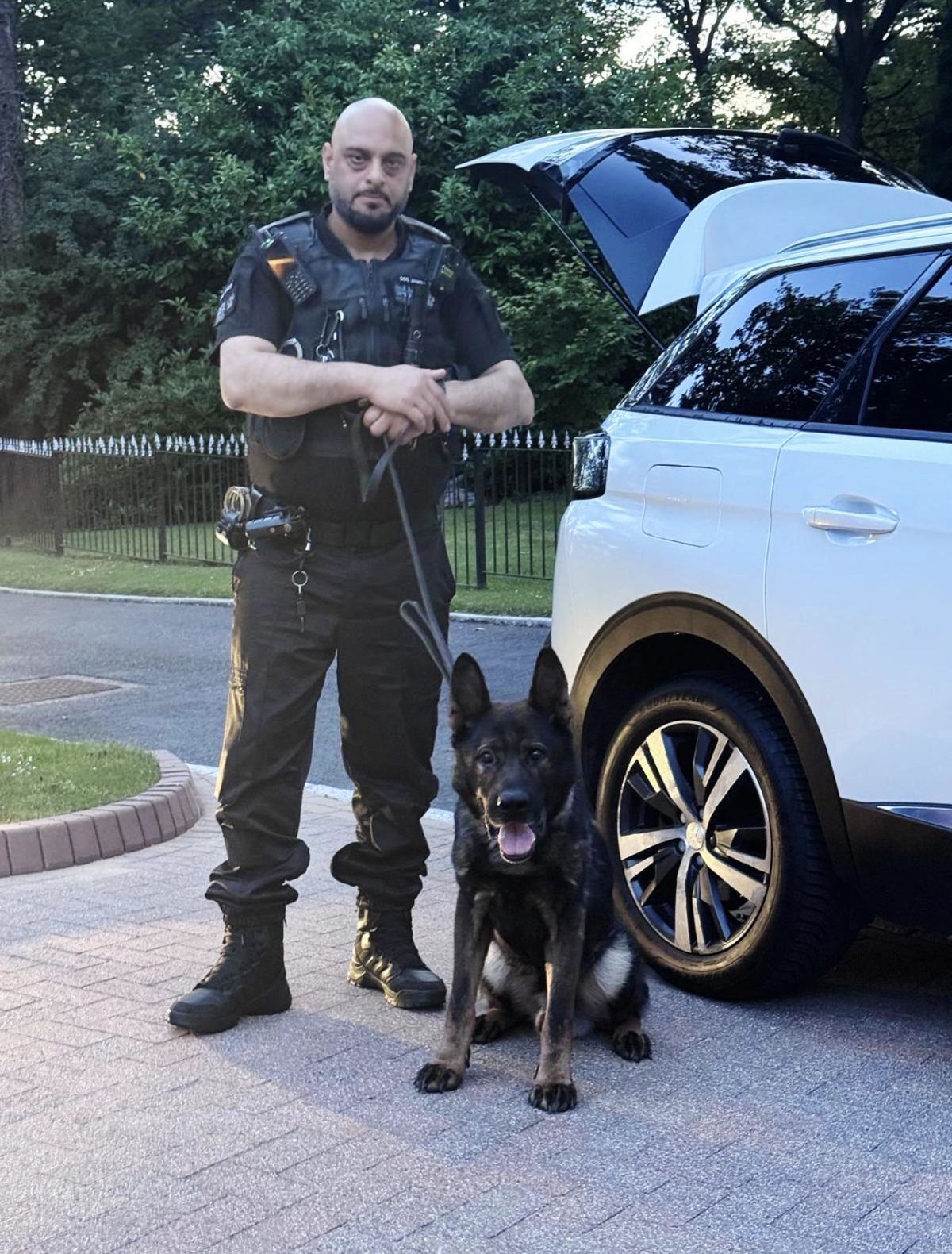
A security dog team is a handler and a dog working together.
Read moreShow less
The general-purpose security dog’s value comes from three abilities:
- Detection. A dog’s sense of smell and hearing can indicate a person hidden in a yard, a building or vegetation long before an officer would see them.
- Deterrence. A visible dog team, and the warning notices that go with it, discourage many intruders from attempting entry.
- Coverage. A dog can help a single handler search large areas, plant compounds and stacked materials more quickly and safely.
The handler remains responsible for every decision. The dog is a tool for detection and deterrence, and its use must always be proportionate.
The Guard Dogs Act 1975
The Guard Dogs Act 1975 applies in England, Wales and Scotland.
Read moreShow less
Section 1 sets three core rules:
- Handler present and in control. A person must not use or permit the use of a guard dog at any premises unless a person capable of controlling the dog (the handler) is present on the premises and the dog is under the handler’s control at all times while it is being used, except while it is secured so that it is not at liberty to go freely about the premises.
- Handler duty. The handler must keep the dog under control at all times while it is being used as a guard dog, except while another handler has control of it or it is secured.
- Warning notices. A guard dog must not be used unless a notice containing a warning that a guard dog is present is clearly exhibited at each entrance to the premises.
Contravening section 1 is a criminal offence, punishable on summary conviction by a fine up to level 5 on the standard scale. A professional dog handling service will always deploy a handler with the dog. The site’s assignment instructions should list where warning notices are and include a check that they are still in place.
SIA licensing and the handler
A dog handler who guards premises under a contract is carrying out licensable security activity and must hold the relevant SIA front-line licence, in the same way as any other security officer.
Read moreShow less
Licences can be checked on the SIA public register. The licence is separate from the handler’s dog handling qualifications, which demonstrate competence in handling and caring for the dog.
In June 2026 the SIA published guidance for approved contractors that subcontract dog handling services. It expects the lead contractor to check the subcontractor’s SIA licences, dog handler qualifications and insurance, to set clear expectations for training, welfare, deployment and supervision, and to audit the work regularly, including dog welfare. That guidance is useful for buyers too: it shows the questions a responsible provider should be asking of itself and its partners.
Standards: BS 8517 and industry schemes
The BS 8517 codes give recommendations on how security dogs and their handlers are trained, cared for and deployed.
Read moreShow less
The SIA’s dog handling guidance refers to the NASDU standard, or an equivalent, which includes adherence to BS 8517-1 and BS 8517-2.
A code of practice is guidance rather than law, and providers describe their alignment with it in different ways. When buying a dog handling service, it is reasonable to ask:
- how handlers and dogs are trained and assessed, and how often refresher training takes place;
- which standards or codes the training follows;
- how training and veterinary records are kept and whether they can be inspected;
- what insurance covers dog handling activities.
Welfare: a legal duty, not an option
In England and Wales, section 9 of the Animal Welfare Act 2006 requires the person responsible for an animal to take reasonable steps to meet its needs to the extent required by good practice.
Read moreShow less
Those needs include a suitable environment, a suitable diet, the ability to exhibit normal behaviour, appropriate housing with or apart from other animals, and protection from pain, suffering, injury and disease. Scotland has its own animal welfare legislation with similar duties.
For a security deployment, welfare considerations include:
- shift lengths and rest breaks for the dog as well as the handler;
- suitable transport, with ventilation and temperature control;
- access to water, shelter and a safe rest area on site;
- avoiding hazards such as chemicals, sharp debris, extreme heat and unsafe structures;
- regular veterinary care and health checks.
Clients should expect the provider to raise any site conditions that would compromise a dog’s welfare, and to adjust the deployment accordingly.
When a dog team adds value
Read moreShow less
| Site situation | Why a dog team helps | Points to consider |
|---|---|---|
| Large construction sites and plant compounds | Detects people hiding among materials and plant; strong visible deterrent | Hazards on site; secure area for rest; warning notices at all gates |
| Vacant or derelict properties | Searches large, dark buildings more safely; deters squatters and metal thieves | Structural safety; asbestos or debris; access for the handler’s vehicle |
| Logistics yards and open storage | Covers wide areas and trailer parks at night | Moving vehicles; interaction with drivers; lighting |
| Events and exhibitions (perimeters) | Deters fence-jumping and overnight theft from stands | Public proximity; crowd interaction must be avoided; licensing for the event |
| Sites with recent repeat incidents | Short-term high-visibility deterrence | Should be combined with fixing underlying weaknesses |
When a dog team is not the right choice
A dog team is generally less suitable for customer-facing roles such as reception, for sites where the public is present in large numbers at close quarters, or for buildings where a dog cannot work safely. In those settings, static guarding, CCTV or mobile patrols are usually more appropriate. A dog team also does not replace good physical security: fencing, lighting and locks still matter.
How a dog handling deployment is set up
A well-run deployment usually follows these steps:
Read moreShow less
- Assessment. A site visit to understand the risks, layout, hazards and whether a dog team is appropriate.
- Assignment instructions. Patrol routes, search areas, escalation contacts, police liaison and notice locations, agreed with the client.
- Deployment. Handler and dog arrive with suitable transport; warning notices are checked; the handler carries out an initial site familiarisation.
- Monitoring. Patrol records, incident reports and supervisor checks, including welfare checks.
- Review. Regular review of incidents and whether the dog team is still the right control.
Seccuro’s K9 service follows this assessment, deployment and monitoring approach and can provide a rapid K9 response where a site needs short-notice cover.
Use of force and liability
A security dog is not a weapon to be used against people.
Read moreShow less
Handlers should keep the dog under control, use verbal challenges, and withdraw and call the police rather than escalate. Any use of force must be lawful, necessary and proportionate, and every incident involving the dog should be recorded in full. The Guard Dogs Act does not itself create a right to sue for breach of its rules, but other civil and criminal liabilities remain, so insurance and procedures matter.
Arranging a dog handling service
If you are considering a dog team for a construction site, vacant property or yard, Seccuro can assess the site and advise whether dog handling, guarding, patrols or a combination is the better fit.
Read moreShow less
See our security dog handling service and vacant property security, or request a quote.
Questions
Is it legal to leave a guard dog loose on a site overnight?
Not unless it is secured so that it cannot roam freely. Leaving an unaccompanied dog loose on a site is an offence.
What is BS 8517?
BS 8517 is a series of British Standard codes of practice for security dogs. Part 1 covers general-purpose security dogs and Part 2 covers detection dogs.
What warning signs are required for guard dogs?
The Act does not set a design. A good notice is clearly visible from outside the premises, legible in poor light and positioned at every pedestrian and vehicle entrance, including secondary gates.
Sources (5)Hide sources
- legislation.gov.uk: Guard Dogs Act 1975, section 1
- legislation.gov.uk: Guard Dogs Act 1975
- legislation.gov.uk: Animal Welfare Act 2006, section 9
- GOV.UK (SIA): SIA approved contractors sub-contracting dog handling services
- GOV.UK: Check security staff have a licence to work
General guidance, not legal advice. Check current legislation and official guidance for your circumstances.