
Retail security risk management means identifying where a store is exposed to theft, fraud, violence and abuse, then putting in place proportionate controls, such as store design, staff procedures, uniformed security officers, CCTV and reporting, to reduce those risks while keeping colleagues and customers safe. The aim is not to stop every theft at any cost; it is to reduce loss without putting people in danger.
Read moreShow less
This guide is for store, area and loss prevention managers and for facilities and procurement teams responsible for retail security. It sets out the main risks, the legal position as it stands in October 2026, and how to use security officers and technology effectively.
Key takeaways
- Retail security risk management should treat staff safety and loss prevention as connected, not competing, priorities.
- HSE defines work-related violence to include verbal abuse and threats, not only physical assault, and expects employers to assess and control the risk.
- The Crime and Policing Act 2026 creates a standalone offence of assaulting a retail worker in England and Wales, but at the time of writing that section is not yet in force.
- Scotland already has a specific offence of assaulting, threatening or abusing a retail worker under a 2021 Act.
- CCTV and body-worn video in stores must comply with UK GDPR and the ICO’s video surveillance guidance.
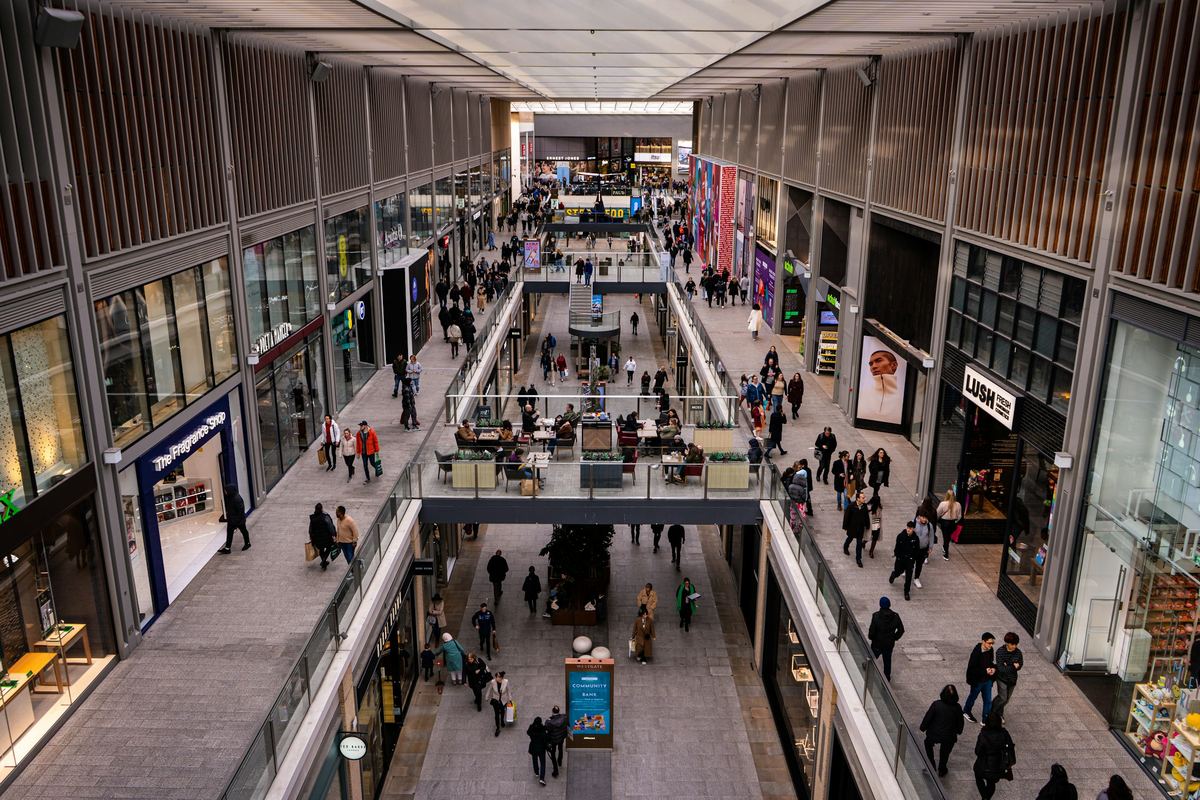
Understanding the risks
Read moreShow less
Shrinkage
Shrinkage is the difference between the stock a retailer should have and the stock it actually has. It includes customer theft, internal theft, fraud (including refund and gift card fraud), supplier error and administrative mistakes such as mis-scanned deliveries. Security officers mainly influence external theft and some forms of fraud. Internal theft and process errors need controls from operations, finance and HR as well.
Violence and abuse toward staff
For many retailers, abuse and violence toward colleagues are now the more pressing concern. HSE defines work-related violence as any incident in which a person is abused, threatened or assaulted in circumstances relating to their work. That definition includes verbal abuse and threats, in person, online or by phone, as well as physical attacks. Common triggers in retail include challenges over shop theft, age-restricted sales, refusals of service and queues.
The UK Government’s retail crime factsheet for the Crime and Policing Act 2026 summarises several sources, including ONS crime statistics and retail industry surveys, on the scale of shop theft and of violence and abuse toward shop workers, and notes that only a small proportion of retail crime reaches the police. Retailers should use their own incident data to understand how those national trends play out in each store.
Other risks
- organised groups targeting specific product lines;
- anti-social behaviour around entrances, car parks and late-opening stores;
- burglary and ram-raids out of hours;
- cash handling and delivery risks;
- risks to lone workers opening and closing stores.
The legal position in October 2026
Read moreShow less
England and Wales: the Crime and Policing Act 2026
The Crime and Policing Act 2026 received Royal Assent on 29 April 2026. Part 3 deals with retail crime:
- Section 45 creates an offence of assaulting a retail worker at work. It covers people working on or about retail premises for or on behalf of the owner or occupier, as well as the owner or occupier, and includes unpaid work. It is a summary offence. The Government’s factsheet describes the maximum penalty as six months’ imprisonment, an unlimited fine or both.
- Section 46 places a duty on courts to make a criminal behaviour order on conviction for an offender aged 18 or over, unless exceptional circumstances justify not doing so. Such an order could, for example, bar the offender from specified shops.
- Section 47 removes the rule that shop theft of goods worth £200 or less is a summary-only offence, so all shop theft would be triable either way.
Important: at the time of writing, legislation.gov.uk shows sections 45 and 47 as prospective, meaning they were not in force at Royal Assent and will commence on a date set by regulations. Retailers should check the current status before relying on them in policies or staff communications.
Separately, an existing provision already applies. Section 68A of the Sentencing Code (Sentencing Act 2020), inserted in 2022, requires courts to treat an offence against a person providing services to the public as an aggravating factor. That provision applies to many retail workers today.
Scotland
The Protection of Workers (Retail and Age-restricted Goods and Services) (Scotland) Act 2021 already makes it an offence to assault, threaten or abuse a retail worker engaged in retail work, where the offender knows or ought to know that the person is a retail worker. Retailers operating in Scotland should reflect this in their staff guidance.
Health and safety duties
Whatever the criminal law says, employers have a duty to protect workers from violence and aggression. HSE’s guidance expects employers to assess the risks, put suitable control measures in place, respond to incidents and support affected workers. Where a violent incident causes a reportable injury, RIDDOR may also apply: the RIDDOR definition of an accident includes an act of non-consensual physical violence done to a person at work.
Building a retail security risk assessment
Read moreShow less
- Gather data. Incident logs, stock loss figures by product line, refund reports, CCTV reviews and staff feedback.
- Identify hotspots. Times of day, entrances, aisles, tills and product categories where incidents cluster.
- Assess who could be harmed and how. Including lone workers, young workers and staff enforcing age restrictions.
- Select controls. Store layout, product protection, staffing levels, security officers, CCTV, radios and procedures.
- Record and review. Document decisions and review after incidents and at least annually.
The role of uniformed security officers
A uniformed security officer at the entrance or on the shop floor provides visible deterrence, reassurance for colleagues and customers, and a trained response when incidents occur.
Read moreShow less
The value comes from presence and engagement, not confrontation.
| Officer task | Purpose |
|---|---|
| Greeting customers at the entrance | Signals that the store is attentive; deters opportunistic theft |
| Patrolling high-risk aisles | Reduces concealment opportunities |
| Supporting colleagues at tills and refusals of service | De-escalates tension before it becomes abuse |
| Monitoring CCTV where provided | Identifies suspicious behaviour early |
| Recording incidents accurately | Provides evidence for police and for trend analysis |
| Supporting opening and closing | Reduces lone working risk |
Contract security officers in retail must hold the relevant SIA front-line licence. Assignment instructions should state clearly what officers may and may not do, including the store’s policy on detaining suspected thieves. Many retailers adopt a policy of observe, deter and report rather than physical intervention, because of the risk to officers and staff. Any use of force must be lawful, necessary and proportionate.
For a wider comparison of static officers and patrols, see mobile patrols vs static guarding.
CCTV and body-worn video under UK GDPR
CCTV is a core retail control, and body-worn video is increasingly common for staff and officers.
Read moreShow less
Both involve processing personal data, so UK GDPR and the Data Protection Act 2018 apply. The ICO’s video surveillance guidance expects retailers to:
- complete a data protection impact assessment before deployment, covering higher-risk features such as audio recording;
- display signage that is visible before people enter the monitored area, names the operator and gives a contact route;
- set retention periods by purpose and delete footage securely;
- restrict who can view and export footage, and keep an audit trail of disclosures to police;
- be able to respond to subject access requests, redacting third parties where necessary.
Facial recognition technology needs particular care. The ICO treats it as an additional consideration, and retailers considering it should complete a thorough DPIA and take specialist advice before any deployment.
Reporting and working with the police
Good reporting supports prosecutions, helps police target repeat offenders and shows the scale of the problem.
Read moreShow less
Each incident report should record what happened, who was involved, any injuries, what was taken, what CCTV exists and what action was taken. The Government has said that a standalone retail worker assault offence will also help make sure such assaults are recorded separately. See our guide to security incident reporting for a full checklist.
Measuring whether controls are working
Useful indicators include incidents of abuse and violence per week, known losses by product line, refunds without receipts, officer interventions and outcomes, and staff confidence measured through short surveys.
Read moreShow less
Review them monthly with the security provider and adjust deployment, such as moving officer hours to peak incident times.
How Seccuro supports retailers
Seccuro provides uniformed security officers for retail environments, along with mobile patrols, keyholding and alarm response, lock and unlock services and CCTV monitoring, available across the UK.
Read moreShow less
Deployments are scoped around each store’s risk assessment and reviewed against agreed measures. See our retail security page and security guarding service, or request a quote.
Questions
Can retail security officers detain shoplifters?
Any person may make an arrest in limited circumstances under the general law, but it carries real risk to officers, staff and the public.
Do stores need signs for CCTV and body-worn cameras?
Yes. Signs should meet the ICO expectations set out above, and body-worn video users should also make it clear when recording is taking place.
Is verbal abuse of staff a health and safety issue?
Yes. The employer’s duty to assess and control the risk applies regardless of whether a criminal offence is prosecuted.
Sources (9)Hide sources
- legislation.gov.uk: Crime and Policing Act 2026, section 45 (assault of retail worker)
- legislation.gov.uk: Crime and Policing Act 2026, section 47 (theft from shop)
- GOV.UK (Home Office), Crime and Policing Act 2026: retail crime factsheet
- GOV.UK: Crime and Policing Act 2026 collection
- legislation.gov.uk: Sentencing Act 2020, section 68A
- legislation.gov.uk: Protection of Workers (Retail and Age-restricted Goods and Services) (Scotland) Act 2021
- HSE: How employers can protect workers from violence and aggression at work
- legislation.gov.uk: RIDDOR 2013, regulation 2 (interpretation)
- ICO: Video surveillance (including guidance for organisations using CCTV)
General guidance, not legal advice. Check current legislation and official guidance for your circumstances.